What Does “Non-Intoxicating Cannabinoid” Mean in This Context?
“Non-intoxicating cannabinoid” sounds like a simple product promise: take this cannabinoid and you will not feel high. But the phrase can mean different things in a product description, a lab report, or a law. Those meanings should not be blurred together.
In the context of the federal hemp definition rewrite, “non-intoxicating” does not automatically mean “outside the law’s THC limits.” A cannabinoid may not usually produce a noticeable high on its own and still appear in a product that contains THC. The legal question can turn on the amount of THC in the finished product—not just which cannabinoid the label puts in large type.
This distinction matters for products marketed around CBD or CBG. It also makes the certificate of analysis (COA), the exact product batch, and a usable QR code COA lookup more important than a broad front-label claim. Here is what the terminology means, what the rewrite changes, and what shoppers should check.

Three different meanings of “non-intoxicating”
The phrase is often used to describe a cannabinoid’s expected effects. CBD and CBG are commonly marketed as non-intoxicating because they are not generally associated with the THC-like high people mean when they talk about cannabis intoxication. That is a description of typical effects—not a guarantee for every person, dose, or formulation.
“Non-intoxicating” can also be used as a shorthand for a product’s intended experience: for example, a CBD tincture sold for people who do not want a high. But the phrase by itself does not tell you whether the product contains detectable THC, how much THC it contains, or whether it complies with a legal limit.
Finally, it can be confused with a legal classification. A cannabinoid’s reputation as non-intoxicating does not necessarily exempt a product containing it from rules that count THC in the finished product. For compliance purposes, the label claim and the legal test are separate questions.
What the federal hemp definition rewrite changes
Congress has enacted a rewrite of the federal hemp definition that is scheduled to take effect in November 2026. The timing matters: as of October 15, 2026, the change has not yet taken effect. Until its effective date, existing federal and state requirements still matter; after that date, businesses and consumers will need to evaluate products against the revised definition and any other applicable rules.
The rewrite shifts attention toward the composition of finished hemp-derived cannabinoid products. Among the changes, it uses a per-container limit of 0.4 milligrams of total THC for covered final products. The details of the statute, its definitions, and any implementation guidance matter, so a short label phrase should not be treated as a complete legal analysis.
This is why “hemp,” “CBD,” or “non-intoxicating” on a package should not be treated as a substitute for checking the product’s cannabinoid content. The White House’s role in signing legislation is distinct from Congress’s role in writing and passing it; neither a brand’s marketing copy nor a general news headline tells you whether a particular container meets the legal standard.
What does the 0.4 mg cap mean?
The cap is expressed per container, not simply as a concentration per gram or a percentage of the product. That makes serving size and package size important. A product could have a low THC concentration and still exceed a per-container limit if the container holds enough servings. Conversely, a concentration figure alone does not show the total amount in the package.
The key phrase is total THC. A shopper should not assume that checking only the delta-9 THC line on a COA is enough to determine whether a product meets a total-THC limit. The relevant calculation and the legal definition should be checked against the rule that applies to the product and date in question.
Total THC versus delta-9 THC
Delta-9 THC is one cannabinoid measured in cannabis and hemp products. THCA is a related acidic cannabinoid found in raw plant material. Heat can convert THCA into delta-9 THC through decarboxylation, which is why THCA-rich flower can produce intoxicating effects when smoked or vaporized.
In common testing and labeling contexts, “total THC” estimates the THC that may be present after THCA is converted. A frequently used calculation is:
Total THC ≈ delta-9 THC + (THCA × 0.877)
The factor accounts for the change in mass during conversion. The exact reporting approach and legal definition can vary, so do not treat this formula as a replacement for the applicable law or the lab’s stated method.
This is where a COA that shows delta-9 THC but hides or public law 119-37 hemp omits THCA raises a red flag. A low delta-9 result does not, by itself, prove that a product has low total THC. For flower especially, a THCA result can be central to understanding what the product may become when heated.
THCA conversion, product use, and labeling
THCA is often described as non-intoxicating in its raw form because it does not produce the same effects as delta-9 THC in the same way. But calling THCA “non-intoxicating” without mentioning heat-driven conversion leaves out the part many consumers need to know. When heated, THCA can convert into delta-9 THC, which can cause intoxication.
That conversion matters for both consumer expectations and labeling. A label that highlights a low delta-9 number while emphasizing a high THCA amount may give an incomplete picture if the product is meant to be heated. Likewise, a “hemp” label does not explain how the product’s total THC is calculated or whether the finished container meets a particular legal cap.
Good product information should make the relevant cannabinoid amounts easy to find and should identify the test results for the batch being sold. If a brand talks about THCA but provides no batch-specific COA, or if the COA lists delta-9 but not THCA, ask for a clearer report before relying on the claim.
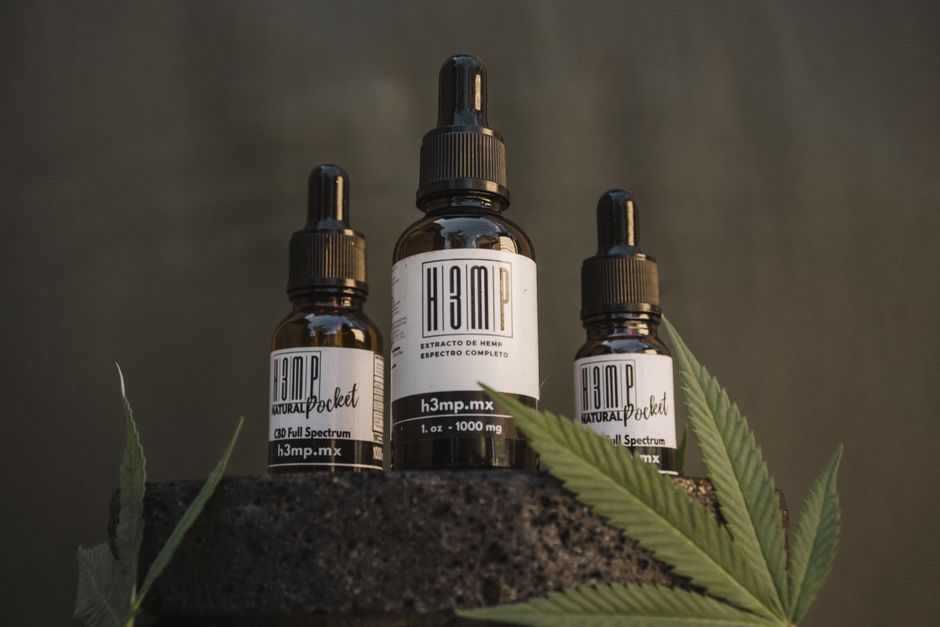
CBG non-intoxicating: useful shorthand, not a compliance pass
CBG non-intoxicating is a common way to describe the typical effects associated with cannabigerol. CBG is not generally considered to produce the THC-like high people associate with delta-9 THC. That can be a helpful consumer distinction, but it does not tell you whether a CBG product contains THC from the source material, extraction, formulation, or manufacturing process.
A product can be primarily CBG and still contain some delta-9 THC or THCA. If the applicable federal rule counts total THC in a finished container, the product’s main cannabinoid does not erase the THC measurement. In other words, “mostly CBG” and “under the THC cap” are different claims, and each needs its own evidence.
CBD is similar in this respect. The phrase CBD not aimed by law can be misleading if it suggests that CBD products are automatically exempt from THC-related requirements. The rewrite is directed at the legal definition and THC limits for covered hemp-derived products; a product’s CBD content does not necessarily make THC in that product irrelevant. A CBD formula may still need to meet the 0.4 mg cap if that cap applies to it.
Brands such as Joy Organics may offer products positioned around CBD, but a brand name or product category is not a substitute for checking the specific formula and batch. Look at the actual container, serving count, cannabinoid panel, and matching lab report—not just the brand’s general explanation of hemp.
How to check a COA and QR code COA lookup
A COA is useful only if it relates to the product in your hand. At the counter, I learned to check the batch number before believing a label. A report for a different flavor, strength, or production run may tell you very little about the container you are considering.
- Match the batch. Compare the lot or batch number on the package with the number on the COA. If the numbers do not match, ask the company for the correct report.
- Confirm the product identity. Check that the report names the same product, formulation, and strength—not merely the same brand.
- Find the relevant THC lines. Look for delta-9 THC and THCA, as well as a total-THC result or enough information to understand how total THC is reported.
- Check units and serving information. A result in milligrams per gram is not automatically the amount per container. Use the report and package details to understand the total amount in the full container.
- Review the lab and test date. A COA should identify the testing laboratory and provide a date. If the report is hard to read, incomplete, or not independently verifiable, treat that as a reason to ask questions.
- Use the QR code carefully. A QR code COA lookup should lead to a report for the batch in front of you. A generic brand page or a report for another lot is not a batch-specific lookup.
Practical takeaways for shoppers and brands
For shoppers, “non-intoxicating” is best read as a description of expected effects—not a complete ingredient statement or legal guarantee. If you need to avoid THC, look for clear results and ask whether “not detected” means below a stated limit of detection or limit of quantitation. A vague “THC-free” claim without a test method and reporting threshold does not answer that question.
For brands and retailers, precise wording is safer and more useful than broad assurances. State what was tested, identify the batch, disclose THCA where relevant, explain how total THC is reported, and avoid implying that CBD or CBG content alone settles legal compliance. The federal rewrite’s 0.4 mg per-container cap makes it especially important to connect lab results to the actual container—not just to a concentration or a marketing category.
Rules can also differ by state, product type, and date. As the revised federal definition approaches its scheduled effective date, check current legal guidance rather than relying on an old blog post, a sales training, or a headline that says “hemp ban” without explaining what is changing.
The bottom line
In this context, “non-intoxicating cannabinoid” describes a typical effect profile; it is not a blanket exemption from THC rules. CBG is generally considered non-intoxicating, and CBD is not itself the THC limit at issue, but CBD and CBG products may still contain THC. Where the 0.4 mg per-container cap applies, the product must meet that cap regardless of which cannabinoid appears first on the label.
Let me tell you about a situation I encountered was shocked by the final bill.. Check total THC—not just delta-9 THC—understand how THCA can convert when heated, and use a batch-matched COA. If a QR code does not lead to the report for the product in your hand, keep asking questions.