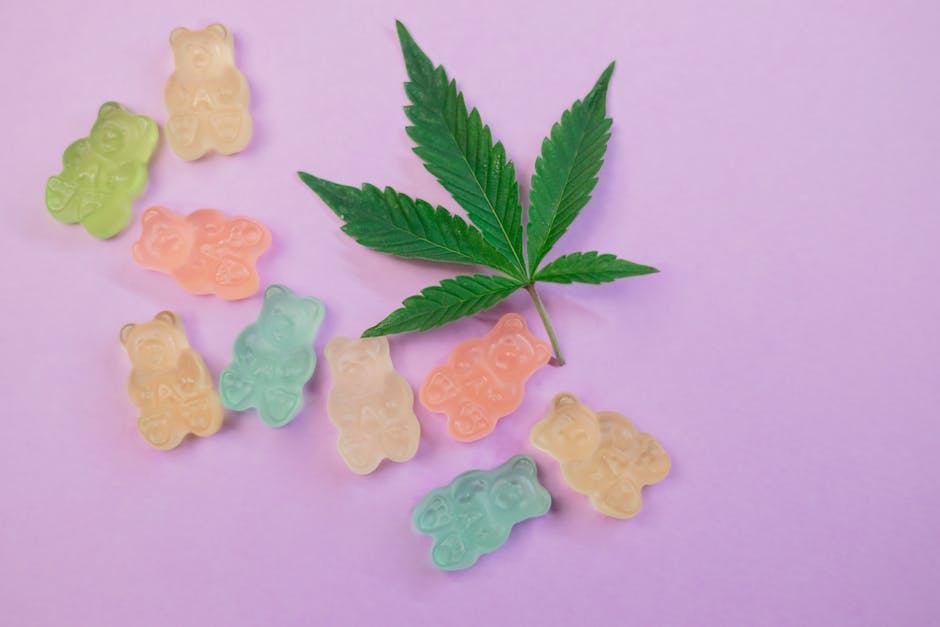
Are USDA-Certified Organic CBD Gummies Safer—or Just Marketing?
Short answer: USDA organic certification can tell you meaningful things about how the hemp was grown and handled. It does not, by itself, prove that a CBD gummy is safer, accurately dosed, free of contaminants, or compliant with every rule that applies to hemp products. Organic certification is useful information—but it is not a substitute for third-party lab testing, Get more information a current certificate of analysis (COA), or careful label review.
That distinction matters as federal hemp rules move toward a definition based on total THC, including THCA, and as new product limits and transition dates approach. Here’s how to assess an organic claim, understand the THC math, and spot the label details that can affect what is actually in the package.
What USDA Organic Certification Does—and Doesn’t—Tell You
USDA organic certification is a regulated production claim, not a general safety seal. For hemp, organic standards address agricultural practices and handling requirements, including restrictions on many synthetic substances and rules intended to protect organic integrity through production and processing. Those standards can make hemp growing standards more transparent and may be important to shoppers who want to avoid certain agricultural inputs.
But certification does not automatically establish that a finished CBD gummy:
- Contains the amount of CBD stated on the label.
- Has no THC, pesticides, heavy metals, residual solvents, or microbes.
- Was made in a facility that prevents mix-ups or cross-contamination.
- Meets the federal and state rules applicable to its ingredients, dose, and package size.
Organic certification also has scope. A certified organic hemp ingredient does not necessarily mean every ingredient in the gummy is organic, or that every stage of manufacturing is covered by the same certification. Check the exact claim on the package and, where available, the certifier and product documentation. A vague “made with organic hemp” statement is not the same thing as a clearly substantiated claim that the finished product is certified organic.
Organic and Tested Are Different Questions
Think of certification and testing as two separate checks. Organic certification relates principally to production and handling standards. A lab report can provide batch-specific analytical results for things such as cannabinoid content and, if tested, contaminants. Neither one replaces the other.
Look for third-party lab testing and a COA that matches the exact product and batch you are buying. A good COA should be easy to connect to the package, often through a QR code or batch number. Check the report date, lab identity, sample description, and analytes tested. A COA from an old batch is not evidence about the current one.
One label phrase that often confuses people is “THC-free.” Unless intoxicating hemp market 28 billion the report supports a non-detect result for the relevant THC forms—and states the lab’s reporting limit—“THC-free” can give shoppers more certainty than the evidence warrants. A report that lists only delta-9 THC may also leave out THCA, which matters under a total-THC approach.
Total THC: Why THCA and the 0.877 Factor Matter
Under the federal hemp definition scheduled to take effect on November 12, 2026, the relevant THC calculation shifts toward total THC, including delta-9 THC and THCA. THCA is the acidic precursor to delta-9 THC. A common calculation converts THCA to its potential delta-9 THC equivalent using a factor of 0.877, then adds the measured delta-9 THC.
The basic calculation is:
Total THC = delta-9 THC + (THCA × 0.877)
For a quick example, imagine a serving has 0.10 milligrams of delta-9 THC and 0.20 milligrams of THCA. The THCA contribution is 0.20 × 0.877, or about 0.175 milligrams. Add the delta-9 amount and the result is about 0.275 milligrams total THC per serving.
That is the per-serving amount. It is not automatically the amount in the whole package. If the package contains four servings, the same example would total about 1.10 milligrams per container (0.275 × 4), assuming each serving has the same measured amounts. Always distinguish serving-level figures from package-level figures.
Why a Per-Container Cap Can Be Stricter
The upcoming federal framework includes a limit of 0.4 milligrams of total THC per container for certain hemp-derived cannabinoid products. The precise application depends on the statutory product definitions and applicable implementation. The practical point is that a container limit is not the same as a per-serving limit.

For example, a gummy could contain 0.15 milligrams of total THC per piece and still exceed a 0.4-milligram container cap if the package contains three pieces: 0.15 × 3 = 0.45 milligrams per container. Looking only at the per-piece number could therefore miss the package-level issue. Conversely, a product’s CBD amount does not tell you its total THC amount; check the cannabinoid results separately.
This is why label documentation should make the serving size, number of servings, and cannabinoid amounts understandable. If the COA reports results in percentages or milligrams per gram rather than per serving, the brand should provide enough information to interpret them without guesswork.
What to compare Quick check Why it matters Per-serving THC Delta-9 + (THCA × 0.877) Shows the calculated amount in one serving. Per-container THC Per-serving total × servings per package Helps assess a package-level cap. COA batch match Compare the report’s sample or lot number with the package Confirms the report is relevant to that product batch.Two Dates to Watch: November 12 and December 11, 2026
Two dates are appearing in discussions of the federal transition: November 12, 2026 and December 11, 2026. They should not be casually treated as interchangeable—or as a blanket assurance that every product can remain on shelves until the later date.
- November 12, 2026: The scheduled effective date associated with the revised federal hemp definition and its total-THC approach, including THCA in the calculation.
- December 11, 2026: A later transition or implementation milestone referenced in connection with the changed rules. Its relevance can depend on the provision, product category, and applicable agency or state requirements.
For retailers and consumers, the safe approach is to check the text and guidance that apply to the specific product rather than assume that the later date creates a universal 30-day grace period. State rules may also be stricter, and enforcement or implementation details can vary. Brands should update formulas, labels, COAs, and distribution plans in time—not wait for a package to become noncompliant before reviewing it.
How to Evaluate an Organic CBD Gummy
- Verify the organic claim. Look for clear wording and information about the certifier and the scope of certification. Distinguish organic hemp ingredients from a certified organic finished product.
- Open the current COA. Use the QR code or batch number, then confirm that the report matches the product and lot in your hand.
- Check both delta-9 THC and THCA. A report listing only delta-9 may not answer a total-THC question. See whether the results allow the total-THC calculation.
- Do the package math. Multiply the per-serving total by the number of servings. Keep milligrams per gummy separate from milligrams per container.
- Review what else was tested. If pesticide, heavy-metal, solvent, or microbial results matter to you, confirm those tests are actually included. Organic certification alone does not show the results of finished-product testing.
- Check dates and claims. A recent report for a different batch is not a substitute for the current batch’s report. Treat absolute claims such as “THC-free” or “legal in all 50 states” skeptically unless the company provides clear, current support.
What About Brands Such as Joy Organics?
Joy Organics is one example of a CBD brand consumers may encounter when comparing organic positioning and product documentation. The useful question is not simply whether a brand uses the word “organic.” Ask what exactly is certified, whether the relevant product’s current COA is accessible, and whether the report shows the cannabinoids and other testing information you need. Brand reputation can help guide your research, but it cannot replace reviewing the specific product and batch.
Retail staff should avoid promising that an organic gummy is “safer” or “THC-free” based only on marketing language. A more responsible answer is: “Organic certification addresses production standards; the current COA is where we check the batch’s cannabinoid results and listed tests.” That explanation is accurate without overstating what either document proves.
So, Safer—or Just Marketing?
USDA-certified organic CBD gummies are not automatically safer in every respect. Certification can be meaningful evidence about hemp growing standards and handling, so it is more than a decorative marketing phrase when it is valid and properly scoped. But it does not verify the finished gummy’s potency or establish that it is free of THC or contaminants.
The strongest evaluation uses both certification and product-specific evidence: clear label documentation, third-party lab testing, and a current COA that identifies the batch and reports delta-9 THC and THCA. With the federal definition moving toward total THC and a stricter per-container limit, shoppers should check the math at both the serving and package level—and revisit the rules around the November 12 and December 11, 2026 milestones.
Organic is one useful signal. It is not a shortcut around reading the label, checking the lab report, or confirming the rules that apply where the product is sold.